What Is a Toilet Tank and How Does It Work?
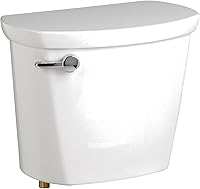
A toilet tank is the water-holding box on top of the bowl, and it releases a measured rush of water through the flush valve when you press the handle. A fill valve refills the tank after each flush while the flapper seals the opening between flushes.
On this page (11 sections)
- What is a toilet tank actually for?
- How does a toilet tank work step by step?
- What parts are inside a toilet tank?
- How does the fill valve know when to stop?
- Why does a toilet tank need a flapper?
- How does the tank connect to the bowl?
- How much water does a toilet tank use?
- How do you set and keep the water level?
- What goes wrong inside a toilet tank?
- When should you call a plumber?
- The short answer on toilet tanks
A toilet tank is the water-holding box on top of the bowl, and it releases a measured rush of water through the flush valve when you press the handle. A fill valve refills the tank after each flush while the flapper seals the opening between flushes.
Most people only notice the tank when it runs, leaks, or makes noise. Knowing what sits inside it turns those problems into simple repairs you can handle without a plumber.
What is a toilet tank actually for?
The tank's job is to store water and release it in one controlled surge, which creates the siphon that pulls waste out of the bowl. Without that stored volume, a flush would dribble instead of clearing the bowl.
A gravity tank holds its water at rest and dumps it when the flapper lifts. Pressure-assist tanks work differently, using trapped air to push water out faster, but the storage principle is the same.
Both types sit on the bowl and connect through a flush valve opening.
The tank also houses the controls that decide how much water each flush uses. That's why nearly every running, weak, or noisy flush traces back to a part inside the tank rather than the bowl itself.
How does a toilet tank work step by step?
Press the handle, the flapper lifts, water rushes into the bowl, and the fill valve resets the tank. Each flush runs through the same short chain of events.
When you push the lever, it pulls a chain that lifts the flapper off the flush valve seat. Water drops from the tank into the bowl through that opening and starts the siphon.
As the tank empties, the float falls and opens the fill valve.
Fresh water flows in through the fill tube and down the overflow tube to refill the bowl, then fills the tank to its set level. The rising float shuts the valve off, and the flapper drops back to seal the opening.
That cycle is the whole story of how a toilet tank works.
What parts are inside a toilet tank?
A fill valve, a flush valve with a flapper, a float, an overflow tube, and a handle make up the working parts. Each one has a single task in the flush cycle.
- Fill valve: opens to refill the tank and bowl, then shuts off when the water reaches the set level.
- Flapper: the rubber seal that holds water in the tank until the handle lifts it.
- Flush valve: the opening under the flapper that water passes through into the bowl.
- Overflow tube: a safety tube that drains excess water into the bowl instead of over the top.
- Float: rises with the water and tells the fill valve when to stop.
- Handle and chain: the link between your hand and the flapper.
Older tanks may use a ballcock and a floating ball on an arm instead of a modern fill valve. The parts change shape, but the roles stay the same.
How does the fill valve know when to stop?
The float sets the shut-off point, and the fill valve closes when the water lifts it high enough. Adjusting that level changes how much water each flush uses.
A float on an arm rides the water surface and trips the valve. Modern fill valves like the Fluidmaster 400H use a vertical float and dials for tank and bowl water level.
Its EZ-Twist body adjusts from 9 in to 14 in to fit more tank sizes.
Set the tank level so the water sits below the overflow tube opening. Too high, and water trickles down the tube and wastes it.
Too low, and the flush gets weak. The Fluidmaster 400H carries a 7 year manufacturer warranty and handles up to 80 psi.
Why does a toilet tank need a flapper?
The flapper is the seal that keeps water in the tank between flushes, and a worn flapper is the most common cause of a running toilet. Rubber hardens over time, so the seal weakens.
When the flapper doesn't sit flat, water leaks past it into the bowl and the fill valve keeps topping up the tank. You'll hear a faint trickle or see ripples in the bowl long after a flush.
Replacing the flapper fixes it.
Flappers come in different sizes. The Korky Large 3-Inch flapper fits large 3-inch flappers on American Standard Cadet three models and tank numbers 2403, 2568, 2907, 4000, 4007, 4019, 4021, 4027 and 4202.
It includes the flapper and a stainless steel chain.
If your toilet runs only now and then, check the flapper first. If it runs constantly, the fill valve or float is the more likely culprit.
Matching the part to your tank saves a second trip.
How does the tank connect to the bowl?
The tank sits on a gasket and is held down by two bolts, so the joint between tank and bowl has to stay watertight. A leak there usually shows as water on the floor around the base.
The gasket sits between the tank outlet and the bowl inlet. Bolts run through the tank and bowl to press the two together.
Over time, the rubber gasket flattens or the bolts corrode.
The American Standard Champion tank-to-bowl coupling kit includes a universal gasket, two hex nuts with washers, two coupling bolts and two tank grommets. It's made for Champion 4 systems.
Its corrosion-resistant bolts suit a leak fix that has to last.
Tighten the bolts evenly and stop once the tank sits firm. Overtightening can crack the tank, which turns a small leak into a full replacement.
Not every tank and bowl pair match, so read our guide on whether all toilet tanks fit all toilets before swapping a tank.
How much water does a toilet tank use?
Older tanks can use 3.5 gallons or more per flush, while modern high-efficiency tanks use 1.28 gallons. That gap adds up over a year in both water and money.
Federal rules have capped new toilet flushes at 1.6 gallons since the 1990s. WaterSense-labeled toilets go further at 1.28 gallons, and a WaterSense toilet is the simplest way to cut water use without changing your plumbing.
Our guide on what a WaterSense toilet is and whether it's worth it covers the savings and the trade-offs.
A weak flush doesn't always mean the tank is too small. A flapper that closes early or a fill level set too low can waste water and still fail to clear the bowl.
Check the settings before blaming the tank size.
How do you set and keep the water level?
Set the tank water level so it sits about 1 inch below the top of the overflow tube. That's the usual starting point, and it leaves room for the float to shut the valve before water spills into the tube.
Most fill valves have a screw or a float clip to change the level. Turn the screw or slide the float up to raise the water and down to lower it.
Flush and watch where the water settles, then adjust again if needed.
A mark or line on the tank wall or overflow tube often shows the intended level. Water above the overflow tube opening drains straight into the bowl and never gets used.
That's one of the quiet ways a toilet wastes water.
What goes wrong inside a toilet tank?
Running, leaking, weak flushes and noisy fills are the four common tank faults, and each one points to a specific part. Diagnosis starts with the water level and the flapper.
- Runs constantly: the flapper isn't sealing or the fill valve won't shut off.
- Runs now and then: a slow flapper leak, often with a faint trickle in the bowl.
- Weak flush: water level set too low or a flapper closing too soon.
- Noisy fill: a worn fill valve or high water pressure.
- Water on the floor: a failed tank-to-bowl gasket or loose coupling bolts.
A simple test helps find a flapper leak. Add a few drops of food coloring to the tank water and wait without flushing.
If color shows in the bowl, the flapper is leaking and needs replacing.
When should you call a plumber?
Call a plumber if the tank itself is cracked, water leaks from the tank body, or a repair doesn't stop the running. Those cases go beyond a swap of inside parts.
Most tank work is DIY friendly. Fill valves, flappers and coupling kits are designed to be installed with basic tools.
A cracked porcelain tank, though, can't be patched safely, and a leak that continues after a flapper and valve replacement may point to a worn valve seat.
If your toilet needs a whole new install rather than a repair, a chair height toilet is the more comfortable option for many adults. An upflush toilet is the fit when there's no floor drain to connect a standard tank to.
The short answer on toilet tanks
A toilet tank is a simple water reservoir with a handful of moving parts, and almost every problem inside it traces back to the flapper or the fill valve. Check those two first before you buy anything else.
Match replacement parts to your toilet model. A universal fill valve like the Fluidmaster 400H fits many tanks, but flappers and coupling kits are often brand specific.
Measure the flapper size and note your tank model before ordering.
Keep the water level about 1 inch below the overflow tube and replace a worn flapper when the tank starts trickling. Those two habits prevent most running toilets and keep each flush using only the water it needs.
Frequently asked questions
Why does my toilet tank keep running after a flush?
A flapper that doesn't seal, a fill valve set too high, or a stuck float can all keep water running. Lift the tank lid and watch the water after a flush to spot which part is failing.
Can I replace just the inside parts of my toilet tank?
Yes. Fill valves, flappers, and tank-to-bowl kits are sold as separate repair parts.
Match the part to your toilet model, since flapper sizes and coupling bolts vary between brands.
Does the toilet tank hold drinking water?
No. The tank holds non-potable water used only for flushing, and it refills from your home's supply line.
It never connects to the bowl's water supply once the flush is done.