Can You Replace Just a Toilet Tank?
Yes, you can replace a toilet tank on its own when the bowl is undamaged and you fit a tank built for that exact bowl. If the bowl is cracked, the flange is failing or the model is discontinued, a full toilet is the better buy.
On this page (8 sections)
- What does a toilet tank replacement actually include?
- Can you replace toilet tank only, or does the bowl have to go too?
- How do you know a new tank will fit your bowl?
- When is a tank-only replacement the right call?
- How do you swap the tank step by step?
- What supplies do you need for a tank replacement?
- What mistakes cause leaks after a tank-only swap?
- Is a tank-only replacement or a full toilet the better buy?
Yes, you can replace a toilet tank on its own when the bowl is undamaged and you fit a tank built for that exact bowl. If the bowl is cracked, the flange is failing or the model is discontinued, a full toilet is the better buy.
A tank-only swap saves money and skips lifting the bowl. It only works when the bowl, the water supply and the mounting holes all line up with the new tank.
The checks below tell you whether a tank-only replacement can work for your toilet.
What does a toilet tank replacement actually include?
A toilet tank replacement means swapping the upper half of the fixture: the tank shell, its lid and the flush valve assembly inside. The bowl, seat, wax seal and floor bolts stay where they are.
That split matters because the tank sits on a gasket that seals it to the bowl. You loosen the tank bolts, lift the old shell, scrape the old gasket and set the new tank on a fresh one.
The fill valve and flapper come with most new tanks, so the water controls are renewed too.
What stays behind is the part most likely to fail with age on the outside: the bowl and its connection to the floor. If those are sound, the tank is the only piece you need to change.
Can you replace toilet tank only, or does the bowl have to go too?
You can replace the tank alone when the bowl passes a few checks. The bowl must be free of cracks and chips, the floor bolts must hold tight and the flange beneath the bowl must be intact.
A wobbly bowl or a soft floor points to a bigger job.
The second condition is fit. A tank works only with the bowl it was designed for, because the outlet size and bolt spacing differ between models.
American Standard lists the bowls its tanks suit, such as models 3517F.101 and 215AA004 for the Cadet Pro tank. Without a match, the gasket won't seal.
If your bowl is sound and you can find its model number, a tank-only replacement is the sensible repair. If the bowl is damaged or the model is long discontinued, price a full toilet instead.
How do you know a new tank will fit your bowl?
Fit comes down to the bowl model, the rough-in and the bolt pattern. Start by looking inside the old tank lid for a model stamp, then match that number to the tank maker's compatibility list.
If the bowl is sound and you can find its model number, a tank-only replacement is the sensible repair.
- Bowl model: the strongest signal. The tank maker lists which bowls its tanks fit, so a matching model number is the safest bet.
- Rough-in: the distance from the finished wall to the drain center. Measure yours using our guide on how to measure toilet rough in, because a 12-inch tank won't sit right on a 10-inch bowl.
- Bolt spacing and outlet size: the tank bolts and the flush outlet must line up with the bowl's holes and opening. A close brand match without a model match can still leak.
Bring the model number to the store or compare it with the tank's listed bowl models before you buy. Guessing from the brand name alone is how tank swaps go wrong.
When is a tank-only replacement the right call?
A tank-only replacement is right when the bowl is solid and the problem sits in the tank. A leaking flapper, a cracked lid or a tank that won't stop running all point to the upper half.
Replacing the tank renews the flush valve and fill valve in one go.
It also suits a bathroom refresh on a budget. A white tank on a sound white bowl looks new without the mess of pulling the bowl and cutting a fresh wax seal.
The tank bolts come off from above, so you don't disturb the floor connection.
Skip it if the bowl rocks, the floor around the flange feels soft or the tank maker no longer lists your bowl model. In those cases the tank may not seal, and a full toilet is the cleaner answer.
Owners weighing the two jobs should also think about the lift, since a whole toilet is heavier than a tank alone.
How do you swap the tank step by step?
The job runs in six steps: shut off the water, empty the tank, undo the bolts, lift the shell, fit a new gasket and set the new tank. Keep a bucket and sponge handy for the last inch of water.
- Close the supply valve behind the toilet and flush to empty the tank. Sponge out what remains.
- Disconnect the supply line from the fill valve and unscrew the tank bolts from below.
- Lift the old tank straight up and set it aside. Scrape the old gasket off the bowl with a plastic scraper.
- Set the new gasket on the bowl outlet and lower the new tank onto the bolts.
- Tighten the bolts evenly, hand tight first, then snug with a wrench. Don't over-tighten, or the ceramic can crack.
- Reconnect the supply, open the valve and check for leaks at the bolts and the gasket before you fit the lid.
If the bowl also needs to come out for the job, read how to remove a toilet first so you plan the wax seal and bolts. A whole-toilet swap also means lifting the bowl, so check how much a toilet weighs before you start.
Which tank works for a straightforward tank-only swap?
The American Standard 4188A004.020 Cadet Pro is the pick when your bowl is one of its listed models. It's a 1.6 GPF single-flush tank in white with a 12-inch rough-in.
American Standard lists bowls 3517F.101, 215AA004, 215BA004, 215CA004 and 215FC004 as matches. The tank has a metal trip lever, a 3-inch flush valve and an antimicrobial EverClean surface.
It ships with an EZ-Install tool and a limited lifetime warranty. Check the bowl model before ordering.
Which tank part suits a Cadet 3 toilet?
If you only need to replace the lid on a Cadet 3 two-piece toilet, the 735121-400.020 tank lid is the part to match. It fits Cadet 3 standard 12-inch rough tanks, models 2386, 2383 and 2384.
The white ceramic lid weighs 8.3 pounds. Look inside your existing lid for the "4021 tank" marking before you order.
It's a lid only, so it won't fix a leaking flush valve.
What supplies do you need for a tank replacement?
You need a tank-to-bowl gasket, tank bolts and a wrench, plus a sponge and bucket. A new tank often includes its flush valve and fill valve but not the bowl-side gasket.
Check the box before you start so you don't make a second trip.
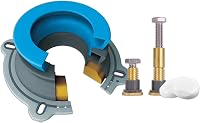
If the bowl is coming out as well, the job also needs a wax ring and floor bolts. The Danco 10879 All-in-One Toilet Installation Kit bundles a Perfect Seal wax ring and Zero Cut Bolts.
The bolts adjust from 1 to 3 inches without cutting, and the seal works with flanges from 1/2 inch above the floor to 1-1/2 inches below. It allows repositioning during installation.
For a tank-only job, the kit's bolts and seal are spare parts you may not need.
What mistakes cause leaks after a tank-only swap?
Most leaks after a tank swap come from the gasket and the bolts, not the tank itself. A reused or twisted gasket leaves a gap at the bowl outlet.
Bolts tightened too hard can crack the tank or crush the seal.
Other common slips:
- Skipping the gasket check. A hard, flattened gasket won't seal. Fit a fresh one every time the tank comes off.
- Mixing parts from two models. A lid or fill valve from another tank often fits poorly. Match parts to the tank's model number.
- Forgetting the supply line. A cross-threaded connection drips slowly. Hand-tighten first, then snug with a wrench.
- Running the toilet before checking. Fill the tank and watch the bolts and base for a minute before you walk away.
If water appears around the floor rather than the tank, the wax seal under the bowl is the likely cause. That points to a full toilet job, not a tank swap.
Is a tank-only replacement or a full toilet the better buy?
A tank-only replacement is the better buy when the bowl, floor connection and flange are all sound and a matching tank exists. You spend less and skip the messiest part of the job.
A full toilet makes more sense when the bowl is damaged, the flange is failing or no tank fits the old bowl.
Before you decide, price the tank plus a gasket and bolts against a complete toilet. Add in the time for lifting a bowl and setting a wax seal if you go full replacement.
When a matching tank is available, the tank-only route wins on cost and effort. That's when you can replace toilet tank only and leave the bowl in place.
If the tank is the only failing part and your bowl is one of the listed models, buy the Cadet Pro tank and fit a new gasket. If you're replacing a Cadet 3 lid, order the 735121-400.020 lid to match.
And when the bowl has to come out, the Danco kit covers the seal and bolts. Check your bowl model first, then choose the job that fits what's actually broken.
Frequently asked questions
Does a new toilet tank come with everything you need?
A new tank usually arrives with its lid and flush valve assembly. You still need a tank-to-bowl gasket and bolts unless the kit includes them, so read the box contents before you start.
A separate installation kit covers the wax seal and floor bolts if you also lift the bowl.
How long does a tank-only swap take?
Plan on 30 to 60 minutes once the water is shut off and the old tank is empty. Add time for a store run if the gasket or bolts don't match.
A full toilet swap takes longer because you lift the bowl and set a new wax seal.
Can you reuse the old tank lid on a new tank?
Only if the lid was made for that tank model. Lids are shaped to the tank rim, so a lid from another model often rocks or leaves a gap.
Order the lid that belongs to the tank, or buy a tank that ships with its own lid.
Is it cheaper to replace a tank or a whole toilet?
A tank alone costs less than a complete toilet, and you skip the bowl removal, new wax seal and floor bolt work. A full toilet costs more but resets the whole fixture.
Price the tank plus gasket and bolts against a complete toilet before you decide.
What tools do you need to swap a toilet tank?
A wrench or adjustable spanner, a sponge and a bucket, plus a screwdriver for the tank bolts. A plastic scraper helps remove the old gasket without scratching the bowl.
Most tanks include an install tool, but keep a wrench handy for the water supply line.
Can you put a new tank on an old bowl with a different rough-in?
No. The rough-in measures the drain center from the finished wall, and the tank has to suit the bowl's design.
Measure yours with a tape before you buy, then match the tank to the bowl model, not just the brand name.