Do All Toilet Tanks Fit All Toilets?
No, toilet tanks don't fit all toilets. A tank must match the bowl's brand, model, rough-in, and flush valve, so swapping a tank onto a different bowl usually leaks or won't seat.
On this page (9 sections)
- Why don't toilet tanks fit all toilets?
- What measurements decide whether a tank fits?
- Does the brand of tank have to match the toilet?
- How do you find the model number on your toilet?
- What happens if you install the wrong tank?
- When is replacing just the tank the right move?
- How do you swap a toilet tank safely?
- How much does tank fit matter for flush performance?
- What should you do before buying a replacement tank?
No, toilet tanks don't fit all toilets. A tank has to match the bowl's brand, model, rough-in, and flush valve, so putting a random tank on a different bowl usually ends in leaks or a tank that won't seat.
That's the short answer to "do all toilet tanks fit all toilets," and the rest of this guide shows what actually has to line up. The good news is that the checks are simple, and most fit problems come down to one or two measurements.
Why don't toilet tanks fit all toilets?
Tanks and bowls are engineered as a matched set, so the mounting holes, outlet, and flush path are built for each other. A tank from another maker won't bolt down cleanly or send water where the bowl expects it.
The bowl decides where the tank sits, how wide its base is, and where the flush valve outlet lands. Even two tanks from the same brand can differ if they belong to different lines or rough-in sizes.
Some makers list specific bowls a tank works with. The American Standard 4188A004.020 Cadet Pro tank, for example, is built for bowl model numbers 3517F.101, 215AA004, 215BA004, 215CA004, 215FC004 and 215DA004.
Anything outside that list is a gamble.
If your bowl number isn't on a tank's list, treat it as a no. A tank that's "close" is the source of slow leaks and wobble.
What measurements decide whether a tank fits?
Rough-in, tank width, depth, and height are the main fit numbers, and they all come from the bowl. Rough-in is the distance from the finished wall to the closet bolts, and 12 in is the most common.
Tank dimensions matter too. The Cadet Pro tank measures 8.87 in deep, 13.06 in wide, and 17.37 in high, so a replacement has to leave room behind and beside the bowl.
The flush valve size is the other key number. A 3 in flush valve like the one in the Cadet Pro needs a bowl designed to handle that volume of water in one go.
Match these before you buy:
- Rough-in: 10, 12, or 14 in, measured to the bolts.
- Tank footprint: width and depth that clear the bowl deck.
- Flush valve: the outlet size the bowl is built around.
- Mounting holes: spacing and thread pattern on the bowl.
Does the brand of tank have to match the toilet?
Yes, in practice the tank should come from the same maker as the bowl, and ideally from the same product line. Cross-brand swaps almost never line up, even when the sizes look close.
Brand matching also keeps the flush performance the bowl was designed for. American Standard pairs the Cadet Pro tank with a Cadet Pro bowl to get its full 1.6 gallon flush and the PowerWash rim scrubbing action.
Mixing brands can void the warranty on one or both parts. If you're replacing a tank on an older toilet, start by finding the bowl's model number, then search within that brand.
How do you find the model number on your toilet?
Look inside the tank lid and on the bowl's back ledge for a stamped or printed model number. These are the numbers you'll match against a replacement tank's compatibility list.
The Cadet 3 lid, for instance, is marked "4021 tank," and American Standard asks you to check inside the existing cover for that marking before ordering. That's the pattern to follow for any brand: find the code, then match it.
If the stamp is worn or painted over, check the owner's manual or the tank's fill valve for clues. A photo of the inside of the tank helps when you call the maker's customer care line.
What happens if you install the wrong tank?
A mismatched tank usually leaks, wobbles, or flushes poorly, and the cause can be hard to trace later. Water seeps at the tank-to-bowl gasket or drips from a misaligned outlet.
Signs the tank doesn't fit:
- The tank rocks on the bowl no matter how you tighten the bolts.
- Water runs constantly or the bowl refills on its own.
- The flush is weak even with the valve adjusted.
- The lid doesn't sit flat or the trip lever binds.
Fixing a leak after the fact costs more than matching the tank up front. If the bowl is fine, a compatible tank is the cheaper repair.
If the bowl is old or cracked, a full toilet is the better call.
When is replacing just the tank the right move?
Replace the tank alone when the bowl is sound and a matching tank is available. That keeps the cost and mess down, since you don't lift the bowl or break the wax seal.
A tank-only swap makes sense when the bowl is intact, the flush valve and fill valve are aging, and you can confirm the bowl model. It also suits rentals or quick fixes where the floor and flange should stay put.
Go with a whole new toilet when the bowl is cracked, the rough-in is unusual, or no compatible tank exists. A full unit also resets the wax ring and bolts, which is worth it on an older install.
For the bowl side of the decision, our guide to the different sizes of toilets explains how rough-in and bowl shape change what fits. If you lean toward a longer bowl, compare the best elongated toilets for comfort and fit.
Which replacement tank is the best pick?
The American Standard 4188A004.020 Cadet Pro 1.6 GPF tank is the strongest choice when your bowl is on its compatibility list. It uses a 3 in flush valve and an EverClean antimicrobial surface, and it includes an EZ-Install tool so no extra tools are needed.
It's a 1.6 gallon single-flush tank with a metal trip lever and a brass shank fill valve. American Standard backs it with a limited lifetime warranty.
Skip it if your bowl isn't a listed Cadet Pro model. A tank is only as good as the bowl it sits on, so match the part number first.
Which tank lid suits a Cadet 3?
The American Standard 735121-400.020 Cadet 3 lid fits Cadet 3 two-piece toilets with standard 12 in rough tanks, models 2386, 2383 and 2384. It's the right part when only the lid is cracked or missing.
Check for the "4021 tank" marking inside your current lid before ordering. This lid is made to fit only the models named, so a close match isn't enough.
Skip it if your tank is a different model or the tank body is damaged. In that case you need a full tank, not just a lid.
How do you swap a toilet tank safely?
Shut off the water, drain the tank, and disconnect the supply line first. Then unscrew the tank bolts and lift the old tank straight up, keeping the tank-to-bowl gasket in view.
Follow the order below:
- Turn off the shutoff valve and flush to empty the tank.
- Sponge out the remaining water and disconnect the supply line.
- Loosen the tank bolts and lift the tank off the bowl.
- Check the gasket and bowl surface for cracks or buildup.
- Set the new tank, tighten the bolts evenly, and reconnect the water.
- Run a flush and check for leaks at the gasket and supply line.
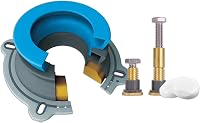
A full kit helps here. The Danco All-in-One Toilet Installation Kit includes a Perfect Seal wax ring and Zero Cut bolts, with sliding adapters and low-profile caps that let you reposition the toilet during the job.
If the bowl comes off the floor, our guide to how to remove a toilet walks through the steps without the mess. For a tight bathroom, a compact toilet may fit better than repairing an oversized one.
How much does tank fit matter for flush performance?
A matched tank and bowl deliver the flush the maker designed, while a mismatched pair can waste water and still leave the bowl dirty. The tank's flush valve and the bowl's trapway work as one system.
The Cadet Pro tank's 3 in flush valve pushes water fast enough for a complete flush when paired with its bowl. Its PowerWash rim scrubs the bowl with each flush, which cuts down on manual cleaning.
Put that tank on an unrelated bowl and the water may splash, run short, or fail to clear the trapway. A weak flush often looks like a valve problem when the real cause is a tank-bowl mismatch.
What should you do before buying a replacement tank?
Confirm the bowl model, rough-in, and brand, then buy a tank that lists your bowl as compatible. That one step prevents most returns, leaks, and wasted weekends.
Start with the stamp inside the lid or on the bowl, and measure the rough-in to the bolts. If you can't find a matching tank for your bowl, price a full toilet before committing to a repair.
So do all toilet tanks fit all toilets? No, and the fit is decided by part numbers, not by how similar two tanks look.
Match the brand and bowl model first, check the rough-in and flush valve, and the rest of the job goes smoothly.
Frequently asked questions
Can I put a different brand of tank on my toilet bowl?
Only if the maker lists that combination as compatible. Tanks and bowls are sold as matched sets, and mixing brands usually means the mounting holes and outlet don't line up.
Check the part numbers for both before buying.
How do I know if a tank fits my toilet?
Look inside the tank lid or on the bowl for the model number, then match it to the tank's listed compatible bowls. Measure the rough-in from the wall to the closet bolts too.
A matching part number is the surest sign of fit.
Is it cheaper to replace just the tank or the whole toilet?
A tank usually costs less than a full toilet, but only if a compatible tank exists for your bowl. When the bowl is old or the matching tank is hard to find, a complete toilet is the simpler and often better value.
Does rough-in size affect tank fit?
Yes. A 12 inch rough-in is standard in most homes, but 10 and 14 inch versions exist.
A tank built for a 12 inch rough-in won't line up on a bowl set for a 10 inch rough-in without adjustment.
What else do I need when swapping a toilet tank?
Plan on a new supply line, a fresh tank-to-bowl gasket, and new closet bolts if you're lifting the bowl. A full installation kit with a wax ring and bolts covers the parts most jobs need.