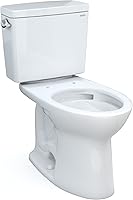
What Is a Compact Toilet, and Will It Fit?
A compact toilet has a shorter front-to-back projection than many standard models, which can free up floor space in a small bathroom. Measure the toilet, rough-in, door swing, and clearances to see whether it will fit your room and suit the people using it.
On this page (6 sections)
A compact toilet has a shorter front-to-back projection than many standard models, which can free up floor space in a small bathroom. Measure the toilet, rough-in, door swing, and clearances to see whether it will fit your room and suit the people using it.
“Compact” is a useful description, not a fixed size standard. A toilet that saves space in one powder room may still crowd a doorway or feel too small for the people who use it.
What is a compact toilet?
A compact toilet is designed to take up less room, often through a shorter projection, round bowl, or both. Compare the actual measurements because the word compact alone does not tell you how much floor space a model needs.
Projection is the distance from the wall behind the toilet to its farthest front point. Width and height matter too, especially if the room is narrow or the toilet sits under a shelf.
For a wider overview of toilet shapes and features, see our guide to toilet styles. If saving floor space is your main goal, compare models in our best compact toilets guide.
How do you measure for a compact toilet?
Measure the rough-in and the available floor space before choosing a model. The rough-in is the distance from the finished wall to the center of the floor drain, while projection and width show how much room the toilet occupies.
How to measure the rough-in
Measure from the finished wall, not the baseboard, to the center of the drain bolts or drain opening. If the toilet is still installed and the center is hidden, measure to the center of one bolt and use that as a guide.
Compare your result with the toilet’s required rough-in. Many models are made for a 12 in rough-in, but some rooms need a different size; our guide to measuring toilet rough-in walks through the steps.
A short toilet with the wrong rough-in won’t solve the fit problem. If your measurement is 10 in, start with 10-inch rough-in toilet options instead of assuming a 12 in model will work.
How to check projection, width, and clearance
Measure from the wall to the front edge of the current toilet, then measure the space available to each side. Check whether the door, vanity, shower, or cabinet can open and remain usable with the new toilet in place.
Use the dimensions for the exact model you are considering. The WinZo Compact One-Piece Toilet measures 23 in deep and 14 in wide, while its stated projection is 22.8 in.
Building rules can also set minimum clearances around a toilet. Check local requirements before buying, especially if you are changing the fixture’s location or remodeling the room.
Does a compact toilet need a round bowl?
A round bowl can help reduce the front-to-back footprint, but compact models also come in different shapes. Compare the measurements and consider whether the seat length feels comfortable for the people who will use it.
The HOROW HWMT-8733S Compact Skirted Toilet has a round bowl and measures 25 in deep by 13.1 in wide. Its dimensions make it an option to compare when front-to-back space is tight.
An elongated bowl may provide a roomier seating area, but can project farther into a small room. Compare the tradeoffs in round vs. elongated toilets before deciding which shape suits your space.
Does seat height matter in a small bathroom?
Seat height affects how the toilet feels to sit on, even when the footprint fits. Check the height from the floor to the seat, and consider who will use the bathroom most often.
The Swiss Madison Sublime II Compact Round Toilet measures 24 in deep and has a standard height of 15 to 17 in. Its round shape and dimensions make it one model to compare for a tight room.
The DeerValley Compact One-Piece Toilet, 12-Inch Rough-In measures 24.61 in deep and has a seat height close to 17 in. That may suit buyers who want a shorter footprint and a higher seat.
For a closer look at seat height, read what a chair height toilet is. If you’re comparing taller models, see extra-tall toilet sizes.
Which compact toilet dimensions should you compare?
Compare depth, width, rough-in, bowl shape, and seat height for each model. A product can be short from front to back yet still be too wide, too low, or incompatible with your drain location.
The WinZo Compact One-Piece Toilet measures 23 in deep and 14 in wide, with a 12 in rough-in and 16 in seat height. Those measurements can help you compare it with models that have a different seat height.
The WinZo requires a 12 in rough-in and does not fit a 10 in rough-in. Check your drain measurement before choosing it for its shorter depth.
Compare dimensions using the same reference points for each toilet. Keep overall depth separate from stated projection when both measurements are available.
When should you choose a compact toilet?
Choose a compact toilet when its measured footprint solves a real space problem and its bowl, seat height, and rough-in suit your bathroom. Confirm the dimensions for the exact model before ordering.
A small powder room may benefit from a round bowl and shorter projection. A shared bathroom may need a more spacious seat, even if it leaves less open floor.
If the rough-in is the main constraint, start with the measurement guide before shopping. If comfort is the concern, compare seat height and bowl shape alongside depth.
For a practical shortlist, browse compact toilet picks, then check each model against your measurements. Choose the one that fits the room and the people using it.
Frequently asked questions
What makes a toilet compact?
A compact toilet takes up less room than many standard models, often by using a shorter front-to-back projection or a round bowl. Compare the full dimensions, since compact does not describe one fixed size.
Check the rough-in and required clearances too.
How do I know if a compact toilet will fit?
Measure from the finished wall behind the toilet to the center of the floor drain, then compare that rough-in with the toilet's stated requirement. Also check its front-to-back projection, width, door swing, nearby fixtures, and the clearances required by local code.
Are compact toilets less comfortable?
Not always, but a shorter toilet can feel cramped if its bowl or seat is too small for you. Compare bowl shape, seat height, and seat length where available, then consider who will use it most.
A compact label alone doesn't tell you how it will feel.
Is a round toilet more compact than an elongated toilet?
Round toilets often take up less front-to-back space than elongated models, but dimensions vary by model. Compare the measured projection and bowl width instead of relying on shape alone.
Our guide to round vs. elongated toilets explains the comfort and fit tradeoffs.