Types of Toilet Tank Insides Explained
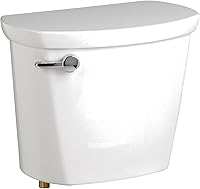
Most toilet tanks hold the same five parts: a fill valve, a flush valve or flapper, an overflow tube, a trip lever and a water supply line. The different types of toilet tank insides vary by flush valve design: flapper, 3-inch flapper, flush tower or dual-flush cartridge.
On this page (10 sections)
- What parts sit inside a toilet tank?
- How does a fill valve work?
- What are the types of flush valve?
- Which fill valve fits my toilet?
- Which flush valve parts are model-specific?
- What is the tank-to-bowl coupling?
- How do I identify my toilet tank mechanism?
- When should you replace tank parts instead of the toilet?
- How do you fix a running toilet?
- The bottom line on tank insides
The different types of toilet tank insides come down to two main systems: the fill valve that refills the tank and the flush valve that empties it. Around those sit the overflow tube, trip lever and supply line.
The flush valve design is what changes most from toilet to toilet.
Knowing which mechanism you have matters when a toilet runs, hisses or flushes weakly. A replacement part has to match the valve body already in your tank.
This guide walks through each mechanism, how to spot it and what to buy when it fails.
What parts sit inside a toilet tank?
Every gravity-flush toilet tank holds the same basic parts, though the shapes and sizes differ. The fill valve, flush valve, overflow tube, trip lever and water supply line make up the working system.
A flush starts at the lever and ends when the fill valve shuts off.
Here is what each part does.
- Fill valve: refills the tank after a flush and controls the water level. It connects to the supply line and the overflow tube.
- Flush valve: releases water from the tank into the bowl. The flapper or tower sits on top of it.
- Overflow tube: a vertical tube that routes excess water into the bowl instead of over the tank rim.
- Trip lever: the handle and arm that lift the flapper or trip the tower when you press it.
- Supply line: the hose from the wall shutoff valve to the fill valve inlet.
The fill valve is the one part that is close to universal. A model like the Fluidmaster 400H fits most toilet brands because its height adjusts from 9 in to 14 in.
Flush valves are more specific, so the flush side is where you need to look closely.
A working tank is a balance between two water levels. The fill valve sets how high the tank fills, and the flush valve sets how much water leaves.
When the two are matched to the bowl, the flush is strong and quiet. When one is off, you get a weak flush or a tank that runs.
How does a fill valve work?
A fill valve opens when the tank drains and closes when the water reaches the set level. It uses a float or a pressure-sensing cap to know when to stop.
Most modern fill valves combine both in one cap assembly.
When you flush, the water level drops and the valve opens. Water flows up through the valve, into the tank and down the overflow tube to refill the bowl.
As the tank refills, the float rises or the cap senses pressure and shuts the valve.
Older toilets used a ballcock with a brass float on a long arm. Newer fill valves are plastic and more compact.
The Fluidmaster 400H is the pressure-cap type, and its tank and bowl adjustment dials let you set both water levels.
Fill valves also do a second job that is easy to miss. They send a share of the incoming water down the overflow tube to refill the bowl after a flush.
That bowl refill level is set separately from the tank level on models with two dials. If the bowl water sits too low after a flush, the bowl dial is the one to adjust, not the tank dial.
If your toilet hisses after a flush or takes a long time to refill, the fill valve is the likely cause. A worn seal or a float set too high keeps water moving.
Replacing the valve is a common fix when the tank will not stop filling.
The inlet and outlet on a standard fill valve both measure 0.75 inches, so the part matches a common supply line and shank size. Check that before buying, because an odd inlet size means an adapter.
The valve also has a maximum working pressure of 80 psi, which covers normal home plumbing.
What are the types of flush valve?
The flush valve is the part that releases water into the bowl, and it comes in four main types. The four are the standard flapper, the large 3-inch flapper, the flush tower and the dual-flush cartridge.
Each one seats differently on the valve body.
Standard flapper valve
The standard flapper is a rubber seal on a 2-inch valve opening. It lifts when the chain pulls it and drops back to seal after the flush.
This is the most common design in older and mid-range toilets.
A standard flapper is cheap and easy to replace. The main wear point is the rubber lip that seals against the valve seat.
Hard water and chlorine break that lip down, which causes a slow leak from the tank into the bowl.
Large 3-inch flapper valve
A 3-inch flapper sits on a wider valve opening and moves more water in less time. The larger opening gives a stronger, faster flush with less water.
Many high-efficiency toilets use this design.
The Korky Large 3-Inch flapper is built for American Standard Cadet models. It includes a stainless steel chain and a red rubber seal.
That seal is made to resist chlorine and hard water, which is where standard flappers wear out first. It also replaces the Cadet flapper part number 738920-0070P and the Pegasus Colonnade flapper, so it covers a couple of common cross-references.
A 3-inch flapper will not fit a 2-inch valve, and the reverse is also true. Measure the opening before ordering.
The Korky fits Cadet models 2403, 2568, 2907, 4000, 4007, 4019, 4021, 4027 and 4202.
Flush tower valve
A flush tower replaces the flapper with a tall cylindrical unit that lifts to release water. The tower seals at its base and rises when the trip lever pulls it.
There is no separate flapper to replace.
Towers are common on newer high-efficiency toilets. They tend to use less water per flush and give a more controlled release.
The trade-off is that a replacement tower is specific to its brand and model, so you cannot swap in a generic flapper.
A tower also changes how you diagnose a leak. There is no rubber lip to inspect on the seat, so a running tower toilet usually points to the tower seal or the canister itself.
Check the trip lever and the tower gasket first, since those are the parts that move and wear.
Dual-flush cartridge valve
A dual-flush cartridge gives you two flush buttons, usually a half flush for liquid waste and a full flush for solids. The cartridge controls both volumes through one valve body.
It is the most complex of the four designs.
Dual-flush toilets save water but have more parts to wear. The cartridge and the buttons are the usual failure points.
Replacements are model-specific, so keep the toilet's model number handy when a flush stops working. A dual-flush tank also has a fill valve like any other, so a full diagnosis means checking both sides.
Which fill valve fits my toilet?
A fill valve is close to universal, but height and inlet size still matter. Most toilets take a 0.75-inch inlet fill valve with an adjustable height.
Check your tank depth and the supply line connection first.
The Fluidmaster 400H fits most toilet models and brands. Its EZ-Twist height covers 9 in to 14 in, so it works in shallow and deep tanks.
The 0.75-inch inlet matches a standard supply line.
Fill valves are the easiest tank part to replace. Shut off the water at the wall, flush to empty the tank, then unscrew the old valve and fit the new one.
Step-by-step instructions come with the valve.
Pick a universal fill valve first when the fill side is the problem. It solves noisy fills, slow refills and tanks that will not stop filling in most toilets.
Height is the one spec to check before buying. A valve that is too short will not reach the water line, and one that is too tall can foul the tank lid.
The 400H covers a wide range with its twist body, and the tank and bowl dials on top let you dial in the flush without bending the float arm.
Which flush valve parts are model-specific?
Flush valves and flappers are far less universal than fill valves. Match the replacement to your toilet's brand, model and valve opening size.
A generic flapper only works on a standard 2-inch valve.
To find your toilet's model, look for a stamp inside the tank lid or on the tank wall. American Standard, Kohler and Toto all mark their tanks.
The model number tells you which flapper or tower to buy.
The Korky 3-inch flapper is a specific fit for American Standard Cadet toilets. That is a narrower fit than a universal flapper.
It is the right part when you know your model, and the wrong part when you don't.
If you cannot find the model number, measure the valve opening and the flapper size. A 2-inch opening takes a standard flapper.
A 3-inch opening takes a large flapper or a tower. Measuring beats guessing when the tank leaks.
Keep a note of your model number in the tank or on a card nearby. The next time a flapper fails, you will not have to measure or guess again.
That one note turns a model-specific part into a quick buy.
What is the tank-to-bowl coupling?
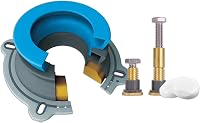
The tank-to-bowl coupling is the seal and bolt set that joins the tank to the bowl. It includes a rubber gasket and corrosion-resistant bolts.
This part is separate from the fill and flush valves.
The coupling sits under the tank. A rubber gasket seals the outlet where water passes from tank to bowl.
Two bolts pull the tank down onto the gasket to hold the seal.
The American Standard Champion coupling kit includes one universal gasket, two hex nuts with washers, two coupling bolts and two tank grommets. It is built for Champion 2-piece toilets.
The bolts are corrosion-resistant.
A leak at the base of the tank, rather than at the flapper, points to the coupling. Water seeps between tank and bowl and shows up as a puddle on the floor.
Tightening the bolts can help, but a worn gasket needs replacing.
The tank grommets matter as much as the gasket. They sit in the bolt holes and keep water from running down each bolt.
When a gasket kit is installed, fit new grommets too, because a reused grommet is a common source of a slow drip.
How do I identify my toilet tank mechanism?
Identify your mechanism by looking at what sits on top of the flush valve opening. A flat rubber flap is a flapper, a tall cylinder is a tower and a cartridge sits under two buttons.
The fill valve is the unit with the float or cap and the water line.
Follow these steps with the tank lid off.
- Look at the flush valve opening. A flat rubber seal on a hinged arm is a flapper. Measure its width to tell 2-inch from 3-inch.
- Look for a tall cylinder rising from the valve. That is a flush tower.
- Look for two buttons on the lid and a cartridge under them. That is a dual-flush system.
- Find the fill valve. It is the unit with the float, cap and water supply line.
- Check the model stamp inside the tank or lid.
Once you know the type, you can order the right part. A flapper toilet takes a flapper.
A tower toilet takes a tower. A dual-flush toilet takes its cartridge.
When should you replace tank parts instead of the toilet?
Replace the worn tank part when the toilet bowl and base are solid. A running or leaking toilet is usually a flapper or fill valve problem, not a reason to replace the whole fixture.
A new valve or flapper costs far less than a new toilet.
Replace the toilet itself when the bowl cracks, the base leaks, or the flush never works well after several part swaps. An old low-flow toilet that clogs often may be worth upgrading.
If you do replace the toilet, plan the lift. Check how much does a toilet weigh so you have the right help and a safe plan.
Then follow our guide on how to remove a toilet to take the old one out without a mess.
Before buying a new toilet, measure the space. Our guide on how to measure toilet rough in explains the wall-to-bolt distance that decides which models fit.
If you are unsure of the size you need, see what are the different sizes of toilets.
How do you fix a running toilet?
A running toilet almost always traces to the flapper or the fill valve. Check the flapper seal first, then the chain, then the fill valve level.
Most runs stop after one part is replaced.
Start with the flapper. Lift it and look at the rubber lip.
If it is stiff, torn or coated in mineral scale, it is not sealing. Fit a new flapper that matches your valve size.
Next, check the chain. It should have a little slack.
A chain that is too tight holds the flapper open, and one that is too loose can catch under the flapper. Adjust the clip on the trip lever.
Then check the fill valve. If water keeps rising past the overflow tube, the valve is set too high or the seal has failed.
Turn the adjustment or replace the valve.
The Fluidmaster 400H lets you set the tank level with a dial. That makes it easy to stop a tank that fills too high.
A new flapper and fill valve together cover most running-toilet causes.
Replace the flapper first if the tank drains slowly into the bowl. Replace the fill valve first if the tank keeps filling and the water runs into the overflow tube.
Pick the part that matches the symptom, and match the part to your toilet's mechanism.
The bottom line on tank insides
The different types of toilet tank insides are easier to tell apart once you know the flush valve is the key difference. A standard 2-inch flapper, a large 3-inch flapper, a flush tower and a dual-flush cartridge are the four flush designs.
The fill valve sits alongside them and is close to universal.
Here is the decision rule. If the tank runs into the bowl, replace the flapper that matches your valve size.
If the tank keeps filling or fills noisily, fit a universal fill valve. If the tank leaks at its base, check the tank-to-bowl coupling.
For a flapper toilet that needs a specific fit, the Korky 3-inch flapper is the pick for American Standard Cadet models. For the fill side in most toilets, the Fluidmaster 400H is the part to buy.
Match the part to the mechanism already in your tank. That one check saves a second trip to the store and stops the leak the first time.
Frequently asked questions
Can I replace a flapper with a different type of flush valve?
No, a flapper and a flush tower are different mechanisms. Match the replacement to the valve body already in your tank, or replace the whole flush valve assembly so the new parts fit together.
A mismatched flapper will leak or fail to seal.
How do I know if my toilet has a 2-inch or 3-inch flush valve?
Measure the diameter of the opening at the bottom of the tank where water drops into the bowl. A 2-inch opening takes a standard flapper, and a 3-inch opening takes a large 3-inch flapper or tower.
Check before ordering a replacement.
Why does my toilet keep running after a flush?
A running toilet usually means the flapper is not sealing, the chain is too short or caught, or the fill valve is set too high. Check the flapper seal first, then the chain slack and the fill valve height.
Replacing the worn part fixes most runs.
What is the difference between a fill valve and a flush valve?
The fill valve refills the tank after a flush and controls the water level. The flush valve releases the water from the tank into the bowl when you press the lever.
They are separate parts, though both sit inside the tank.
Do all toilet tank parts fit all toilets?
No. Fill valves are close to universal, but flush valves and flappers vary by brand and tank design.
A 3-inch flapper for an American Standard Cadet does not fit a standard 2-inch valve.
Match the part to your toilet model.
How long do toilet tank parts last?
Fill valves and flappers wear at different rates. Rubber flappers can lose their seal within a few years, while a fill valve often lasts longer.
Hard water and chlorine speed up wear, so inspect the tank when the flush gets weak or noisy.