What Type of Toilet Do I Have?
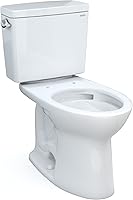
You have a two-piece toilet if the tank sits as a separate part bolted on top of the bowl. Look next at bowl shape (round or elongated), rough-in distance and seat height, and those four facts identify almost every toilet sold today.
On this page (8 sections)
- Is my toilet a one-piece or a two-piece?
- Is my bowl round or elongated?
- What rough-in does my toilet have?
- How tall is my toilet, and does height matter?
- Which flush type and water use does my toilet have?
- Which seat and mounting style do I have?
- What do these types mean when you replace the toilet?
- Quick checklist for identifying your toilet type
You have a two-piece toilet if the tank is a separate part sitting on and bolted to the bowl. That is the most common design in US homes, and it is the first thing to check when you ask what type of toilet do I have.
From there, three more checks narrow it down: bowl shape, rough-in distance and seat height. A tape measure and five minutes at the base of the toilet answer all of them.
Knowing your type matters before you buy a seat, a repair kit or a full replacement. It also tells you whether a new toilet will fit the same spot without moving the floor flange.
Is my toilet a one-piece or a two-piece?
A visible seam and two tank bolts mean a two-piece toilet. The tank and bowl are made as separate pieces, then joined with a gasket and bolts at installation.
A one-piece toilet molds the tank and bowl together as a single ceramic unit. Run your hand around the base of the tank: a smooth, unbroken curve means one piece, while a lip or gap means two.
What the seam tells you about cleaning and repairs
The two-piece gap is where dust and hard water collect. A one-piece unit removes that joint entirely.
The St. Tropez, for example, is a single ceramic piece with no tank-to-bowl joint to wipe around.
Two-piece toilets are easier to service. A leaking tank gasket or a failed fill valve is a separate part you can reach without disturbing the bowl.
The TOTO Entrada comes as a tank and bowl set with a tank to bowl gasket and hardware in the box, so the parts that join the two halves are spelled out.
On a one-piece, the flush and fill valves sit inside the tank behind the lid, so the work is similar once the lid is off. The real trade-off: a two-piece gives you more separate parts to service, while a one-piece gives you fewer seams to scrub.
Skirted toilets go a step further. A smooth ceramic panel covers the trapway and hides the floor bolts.
The Casta Diva model is a skirted one-piece, and the maker points out that the smooth shell leaves no hard-to-reach corners. If that sounds like what you want next, our guide to the best skirted toilets compares models that hide the bolts and the bends.
Rule: a seam and bolts mean two-piece, a smooth unbroken base means one-piece, and a smooth outer panel over the trapway means skirted.
Is my bowl round or elongated?
Measure from the wall side of the rim to the front edge. A round bowl comes in around 16.5 inches, while an elongated bowl runs about 18.5 inches.
Look straight down as well: a round bowl is close to as long as it is wide, and an elongated one clearly reaches forward.
The difference is small on paper and obvious when you sit down. An elongated bowl gives more room front to back.
All three toilets in our set use the elongated shape, so if your bowl is round you already know one change you may want.
Shape also changes the seat you buy. A round seat will not fit an elongated bowl, and the mounting holes sit in different places.
A seat sold for an elongated bowl will overhang a round one, so get this check right before you shop for a replacement seat.
How to measure the bowl length correctly
Start at the flat surface of the rim where it meets the wall or tank, not at the tank itself. Measure to the very front tip of the rim, following the center line.
Then measure the width across the widest part of the rim. A bowl that measures close to square in those two directions is round; one that is clearly longer than wide is elongated.
For scale, the St. Tropez one-piece measures 27 inches deep and 15.12 inches wide overall, with the depth figure covering the whole fixture and the bowl reaching forward of the tank.
If you plan to upgrade to the more comfortable shape, our roundup of the best elongated toilets for comfort and fit covers bowls with extra front-to-back room and the seats that match.
Rule: about 16.5 inches means round and about 18.5 inches means elongated, and buy the seat to match the bowl you actually have.
What rough-in does my toilet have?
The rough-in is the distance from the finished wall to the center of the floor bolts. Measure to the middle of a bolt cap, not to the edge of the base, and most US homes come out at 12 inches.
Older or tighter bathrooms sometimes use 10 or 14 inches.
The rough-in decides whether a replacement toilet will line up with the existing floor flange. A 12 inch toilet dropped onto a 10 inch rough-in leaves a gap at the wall, while the reverse pushes the bowl into the room.
Measure to the surface the toilet actually sits against. A drywall wall and a tiled wall finish at different depths, so the number shifts by the thickness of the tile.
Why the rough-in number matters when you replace
A new toilet comes drilled for one rough-in size. Getting it wrong means the flange does not meet the outlet, and the fix is a move of the flange or a different model.
All three toilets in this set use a standard 12 inch rough-in. A model built for 12 inches will not slide onto a 10 inch rough-in without a gap behind the tank.
Write the number down before you shop. It is the single most useful figure when you compare replacements, and it rarely appears in photos.
If the tape lands between standard sizes, round to the nearest one and check the model's allowed range. Many toilets tolerate a small variation, but a gap of two inches does not.
Rule: measure wall to bolt center, expect 12 inches, and match the new toilet to that number before anything else.
How tall is my toilet, and does height matter?
Seat height is measured from the floor to the top of the seat. Standard toilets sit around 15 to 16 inches, while comfort height models land near 17 to 19 inches.
Put a tape or a straightedge across the closed seat to check yours.
Height changes how easy the toilet is to use, especially for older adults or anyone with knee or hip limits. A comfort height bowl means less bending to sit and stand.
A toilet on a thick tile floor also sits higher than the same model on concrete, so measure in your own bathroom rather than trusting the spec.
Standard height vs comfort height vs chair height
The labels overlap. Comfort height and chair height both describe the taller seat position, and ADA compliance is a separate standard that depends on the full installation, not just the bowl.
The TOTO Entrada uses TOTO's Universal Height, which TOTO describes as a seat position comfortable across a broad range of users. TOTO also lists the Entrada as ADA compliant, and it meets EPA WaterSense plus California's CEC and CALGreen requirements.
The Casta Diva goes further on the seat itself: its compact elongated bowl has a 17 inch comfort chair seat height, and the seat comes in the box with soft-close hinges. The St.
Tropez carries comfort height in its name, so all three land in the taller range while their certification details differ.
Rule: below 17 inches is standard height, and 17 to 19 inches is comfort or chair height, so measure the seat top and not the rim.
Which flush type and water use does my toilet have?
Look at the button or lever and count the flush options. A single lever or button means one flush volume.
Two buttons, or a lever that moves two ways, means a dual-flush toilet with a lower volume for liquids and a higher one for solids.
The TOTO Entrada, for instance, has a left-hand chrome trip lever for its single 1.28 gallon flush.
Flush type also shows in the bowl. A siphon jet toilet has a visible jet hole at the front of the bowl sump and uses a trapway that pulls waste through.
A washdown style relies on water running down the bowl surface. The Casta Diva uses a siphon jet with a fully glazed trapway and a MaP rating of 1000 grams, which is a flush performance score rather than a water figure.
Water use is usually stamped inside the tank lid or on the rim near the hinges.
Single flush, dual flush and WaterSense
A dual-flush toilet can cut water use over a single-flush model because most trips only need the smaller volume. The trade-off is a more complex valve inside the tank.
The St. Tropez and the Casta Diva both offer the 1.1 gallon flush for liquids and the 1.6 gallon flush for solids.
The St. Tropez uses a dual vortex flush that spins water around the bowl to scrub it, while the Casta Diva uses a siphon jet.
The TOTO Entrada takes the single-flush route with its E-Max system: a 3 inch wide flush valve, an extra-large siphon jet and a large trapway, all working at 1.28 gallons per flush. TOTO notes that E-Max uses simple, quiet parts rather than the moving parts of a pressure assist toilet.
That matters if noise or repair complexity is a concern in your bathroom.
A WaterSense toilet meets the EPA program's water limit and is independently certified. The label tells you the model was checked for both water use and flush performance, which matters more than the number on its own.
The Casta Diva meets WaterSense criteria and carries CUPC listing, while the Entrada meets WaterSense and California's CEC and CALGreen rules. Check the label on your own tank rather than assuming from the brand.
If your current toilet is an older 3.5 gallon model, a modern replacement saves water on every flush. A budget toilet can make that switch without a big spend.
Rule: one control is single flush, two controls are dual flush, and a WaterSense label confirms the water figure was certified.
Which seat and mounting style do I have?
Check how the seat attaches at the back of the rim. Two bolts through the bowl mean a standard top-mount seat.
A seat with no visible hardware at the hinges may be a quick-release or a hidden-fixing design.
Seat material matters too. Plastic seats are light and common on budget models, while heavier seats hold up better in busy bathrooms.
Soft-close hinges stop the lid from slamming. The St.
Tropez ships with a plastic seat, while the Casta Diva includes a polypropylene seat with soft-close and quick-release hinges.
Mounting style follows the toilet type. Skirted toilets often hide the seat bolts behind the ceramic panel or use side fixings, so a replacement seat has to match that fitting.
The Casta Diva's skirted shell covers the trapway and the floor bolts, so its seat fixings follow the one-piece layout rather than a two-piece bolt pattern.
What to note before buying a replacement seat
Write down the bowl shape, the bolt spacing and the hinge type. A seat sold for an elongated bowl will overhang a round one, and hidden fixings need the matching hardware.
If the seat uses quick-release hinges, a standard seat will not clip onto those posts.
The Casta Diva's seat closes slowly and quietly and releases for cleaning. If your current seat slams, that feature alone may be worth a replacement seat rather than a whole new toilet.
If the seat is fine but the toilet is old and noisy, a full replacement may make more sense. Check the rough-in and bowl shape first, then compare models in your size.
Rule: measure the bolt spacing and bowl shape, then buy a seat built for that combination.
What do these types mean when you replace the toilet?
Match the rough-in, then choose the bowl shape and height you want. Those three facts decide which replacement toilets fit your bathroom, and the tank style is a preference on top.
A one-piece or skirted model costs more but is easier to clean. A two-piece is simpler to service and usually cheaper.
Neither changes the rough-in requirement. All three toilets here use the 12 inch rough-in and the elongated bowl, so the differences between them come down to tank style, height and flush design.
Check the floor flange and the shutoff valve while the old toilet is out. A worn wax ring and a stiff valve are cheap to fix during the swap and annoying to fix later.
The St. Tropez includes a wax ring and bolt kit, and the Casta Diva includes a wax seal and all the hardware needed for installation.
The TOTO Entrada is the opposite case: it needs a wax ring, toilet mounting bolts and water supply lines bought separately, and the seat is not in the box either. Know what comes included before you book the install.
Measure the doorway and the space in front of the bowl before delivery. A toilet is heavy and awkward, and a tight turn in a hallway can stop the install.
Weight matters too: the St. Tropez is listed at 109 pounds, so plan for two people on delivery day.
If you are working to a tight budget, start with the rough-in and bowl shape, then let price decide between models that fit. Our guide to budget toilets keeps the water and flush basics without the premium price.
Rule: rough-in first, bowl shape second, height third, and tank style last, because only the first three decide whether the toilet fits.
Quick checklist for identifying your toilet type
Run the four checks in order and write each answer down. Together they describe your toilet well enough to buy a seat, a repair part or a replacement without guessing.
- Seam and bolts at the tank base: two-piece. Smooth base: one-piece. Smooth outer panel: skirted.
- Rim length about 16.5 inches: round. About 18.5 inches: elongated.
- Wall to bolt center: the rough-in, usually 12 inches.
- Floor to seat top: standard below 17 inches, comfort or chair height at 17 to 19 inches.
Add the flush control count and any WaterSense label, and you have the full picture. A 1.28 gallon single flush and a 1.1/1.6 gallon dual flush tell you different things about the valve you may need to repair later.
Keep the notes with your home records, since the rough-in and bowl shape stay the same even when the toilet changes. The next owner of the house, or the next plumber you call, will thank you for a page that lists all four figures.
If a number falls between sizes, measure twice before you shop. A tape measure is the only tool this job needs.
Take a photo of the tape against the wall and the bolt cap while you are at it, so the measurement is easy to recheck from the photo instead of crawling behind the bowl again.
Rule: four checks, one page of notes, and you can identify what type of toilet you have before you spend a dollar on a replacement.
Frequently asked questions
How can I tell a round bowl from an elongated one without a ruler?
Look straight down at the rim: a round bowl measures close to as long as it is wide, while an elongated bowl clearly stretches forward from the tank. A tape measure confirms it, with round bowls around 16.5 inches and elongated bowls about 18.5 inches from the wall side to the front edge.
What is a rough-in and how do I measure mine?
The rough-in is the distance from the finished wall behind the toilet to the center of the floor bolts. Measure to the middle of a bolt cap rather than the bowl edge, and expect a 12 inch figure in most US homes, with 10 and 14 inch options in tighter or older bathrooms.
Does my toilet's type affect what I can buy as a replacement?
Yes. A replacement has to match the rough-in, the bowl shape you want for comfort and the seat height you prefer.
The tank style matters most for cleaning, since a one-piece or skirted model hides the gap and the bolts that collect dust.
Is a comfort height toilet the same as an ADA toilet?
Not always. Comfort height usually means a seat around 17 to 19 inches from the floor, while ADA compliance depends on the full set of accessibility standards.
The two often overlap, but a toilet labeled comfort height is not automatically certified as ADA compliant.
Why does my toilet have no visible tank bolts or seams?
That points to a one-piece or skirted design. A one-piece toilet molds the tank and bowl as a single unit, and a skirted toilet adds a smooth panel over the trapway so the bolts and curves disappear.
Both are easier to wipe down than a standard two-piece.
Can I swap a round toilet for an elongated one in the same spot?
Usually yes, as long as the rough-in matches and the floor flange is in good shape. The elongated bowl adds about two inches to the front projection, so measure the space in front of the toilet to keep a comfortable clearance.