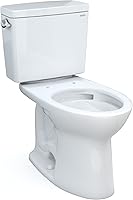
Are One-Piece or Two-Piece Toilets Better?
Two-piece toilets are better for most bathrooms because the separate tank and bowl are lighter to move, cheaper to buy and easier to install on a standard 12-inch rough-in. Pick a one-piece only when you want the smooth, gap-free shell and can handle the extra weight.
On this page (7 sections)
- What is the difference between a one-piece and a two-piece toilet?
- Are one piece or two piece toilets better for cleaning?
- How much does the type affect fit and footprint?
- How does installation differ between the two types?
- Which type costs less and which costs more to repair?
- Are one piece or two piece toilets better for a small bathroom?
- How do you decide which type to buy?
Two-piece toilets are better for most bathrooms. The separate tank and bowl are lighter to carry, cost less, and are simpler to install on a standard rough-in.
Choose a one-piece when the smooth, seam-free shell matters more to you than the extra weight and price.
Both types use the same plumbing and fit the same drain, so the choice comes down to cleaning, fit, installation and repair. Below is how each tradeoff plays out in a real bathroom.
What is the difference between a one-piece and a two-piece toilet?
A one-piece toilet has the tank and bowl molded as a single ceramic shell, while a two-piece toilet ships as two separate pieces bolted together. That single difference drives nearly every other tradeoff on this page.
On a two-piece, the bowl is set on the floor first, then the tank is lowered onto a gasket and fixed with bolts. On a one-piece, the whole unit goes down in one move.
The flush mechanisms inside are largely the same in both designs.
Because the pieces separate, two-piece toilets are easier to mold and lighter to ship. One-piece shells are larger and heavier, so makers build fewer shapes and buyers pay more for the gap-free look.
Are one piece or two piece toilets better for cleaning?
One-piece toilets are easier to clean. There's no tank-to-bowl seam, no gasket line and no bolt heads on the outside, so a cloth wipes across one smooth surface.
Two-piece toilets leave a joint where the tank meets the bowl. Dust, splashes and cleaner residue gather along that line, and the bolts and caps add small spots to work around.
It's not hard to keep clean, but it takes more passes.
The bowl itself matters too. TOTO's CEFIONTECT glaze on the Drake is an ultra-smooth layer that TOTO says helps waste slide away, which cuts how often you scrub either type.
A skirted toilet goes further by hiding the trapway for a flat side panel you can wipe in one stroke.
How much does the type affect fit and footprint?
Both types fit the same 12-inch rough-in, but one-piece models take up slightly more visual space and come in fewer size options. Measure the wall-to-drain distance before you shop so the toilet lines up cleanly.
The TOTO Drake two-piece measures 28.38 in deep, 17.19 in wide and 30.13 in high. The St.
Tropez one-piece comes in at 27 in deep, 15.12 in wide and 31.18 in high. Neither leaves much room to spare in a tight bathroom, so check your door swing and any nearby vanity.
Two-piece toilets are sold as many separate tank and bowl combinations, so you can match a taller bowl to a compact tank. One-piece designs are fixed units, which means fewer choices but a cleaner line against the wall.
Do you need a taller seat height?
TOTO's Universal Height on the Drake is taller than a standard toilet and meets the ADA height requirement. The St.
Tropez comfort height also sits higher than a standard bowl. If anyone in the house has trouble sitting down or standing up, either type works as long as the model states a comfort or universal height.
How does installation differ between the two types?
A two-piece toilet is usually easier to install yourself because you lift the bowl and tank separately. A one-piece arrives as one heavy unit that two people typically set together.
The Drake two-piece weighs 94 lb as a set, so the bowl alone is a manageable lift for one person. The St.
Tropez one-piece weighs 109 lb in a single piece, which is awkward to lower onto the flange without help. On both, the wax ring, flange bolts and supply line are bought separately.
The Drake needs a wax ring, mounting bolts and water lines before the job. The St.
Tropez includes its seat, wax ring and bolt kit in the box. Either way, a fresh seal kit makes the install cleaner.
Which install kit helps with a two-piece toilet?
The Danco All-in-One Toilet Installation Kit replaces the messy wax ring with a hidden-wax Perfect Seal that Danco says is three times stronger than a regular ring. The Zero Cut bolts adjust from 1 to 3 inches without cutting and allow repositioning during the set.
It works with flanges from 1/2 inch above the floor to 1-1/2 inches below it. That covers the flange depth variation you find in older bathrooms.
Skip it if you already have a wax ring and bolts on hand for a basic swap.
Which type costs less and which costs more to repair?
Two-piece toilets are the budget choice and the cheaper type to repair. The separate pieces are simpler to make, so you pay less up front.
If the tank cracks or a valve fails, you replace only the tank.
One-piece toilets cost more for the single shell. When the tank or bowl is damaged, the whole fixture usually gets replaced because the parts are fused.
That makes the higher price a longer commitment.
For a low-cost install, compare options in our guide to the best budget toilets. If you're planning the whole room, a skirted toilet hides the plumbing and is easier to wipe, though it sits in the one-piece price band.
Are one piece or two piece toilets better for a small bathroom?
Two-piece toilets fit more small bathrooms because the separate tank and bowl give you more size combinations. You can pair a short-depth bowl with a compact tank to save a few inches.
A one-piece takes a fixed footprint. Measure depth from the wall to the front of the bowl and leave space for the door to clear.
A 12-inch rough-in is the common standard, and both types offer it.
Weight matters in a small upstairs bathroom too. A 94 lb two-piece set is easier to move up a narrow stairwell than a 109 lb one-piece.
Check the doorway width and turn radius before delivery day.
Which models suit each type?
The TOTO Drake is the two-piece pick for most homes. Its TORNADO FLUSH swirls water around the rim and the CEFIONTECT glaze reduces how often you clean.
The 1.6 gallon flush uses a wide 3-inch valve and a siphon jet to clear the bowl in one flush.
The Drake fits a 12-inch rough-in and includes the tank, bowl and hardware. You add the seat, wax ring and supply line.
For a closer look at another two-piece model, read our Gerber Maxwell Crest toilet reviews.
The St. Tropez one-piece is the pick when you want the gap-free shell.
Its Vortex dual-flush uses 1.1 gallons for liquid waste and up to 1.6 gallons for solids. The elongated bowl gives extra room and the non-porous ceramic resists scratches.
It includes the seat, wax ring, bolt kit and flush valve, so the install needs fewer extra parts. See how it lines up against another single-shell model in our Casta Diva toilet reviews.
How do you decide which type to buy?
Buy a two-piece if you want the lower price, lighter install and easier tank repair, and buy a one-piece if cleaning the seam is your main frustration. For most homes the two-piece is the better value and the simpler job.
Pick the TOTO Drake two-piece for a standard bathroom with a 12-inch rough-in. Pick the St.
Tropez one-piece for a comfort-height seat and a shell you can wipe in one pass. Add the Danco kit if you're installing it yourself and want to reposition the toilet while you line things up.
Skip the one-piece if you might move the toilet or repair the tank later, since the fused shell limits both. Skip the two-piece if the visible seam and bolts bother you every time you clean.
Once you've settled the type, our toilet styles guide shows how a skirted design changes the look.
Either type flushes the same way once it's in. The real question is how much you'll pay for a smooth shell and how much lifting you want to do on install day.
Frequently asked questions
Why are two-piece toilets cheaper than one-piece?
Two-piece toilets are made and shipped as two separate ceramic pieces, which is simpler to mold and lighter to freight. That usually makes them the budget pick, while one-piece models carry a higher price for the single shell.
Do one-piece toilets fit the same rough-in as two-piece?
Yes. Both types commonly fit a 12-inch rough-in, measured from the finished wall to the drain center.
Check the toilet's stated rough-in before you buy, because a 10-inch or 14-inch setup needs a matching model.
Is a two-piece toilet harder to install?
It's often easier for a do-it-yourselfer. The bowl goes down first and the tank bolts on after, so each piece is lighter to lift.
A one-piece toilet arrives as one heavy unit that two people usually need to set in place.
Which type is easier to repair?
Two-piece toilets are easier to fix when a tank cracks or a fill valve fails, because you can replace just the tank. A one-piece toilet has the tank and bowl joined, so a damaged tank means replacing the whole fixture.